Camping Gear Weight Specs Explained: A How-To Guide
DDD. Dvorak· Content WriterSep 28, 202611 min read2,006 wordsLast Updated: Sep 27, 2026
Understanding Base Weight vs. Worn Weight
Base weight is your gear's total weight without consumables like food, water, and fuel. Worn weight includes everything you're carrying, including clothes on your body and items in your pockets.
Most backpackers focus on base weight first since it's constant throughout your trip. Worn weight varies by season and preference, cold weather means heavier layers, summer means lighter clothing.
This distinction matters because reducing base weight by a few pounds significantly improves comfort and reduces fatigue on multi-day hikes. Ultralight backpacking targets 15-20 pounds base weight, while traditional backpacking ranges from 20-30 pounds. A general guideline suggests keeping pack weight at no more than 20% of your body weight.
The Big Four Gear Items That Dominate Pack Weight
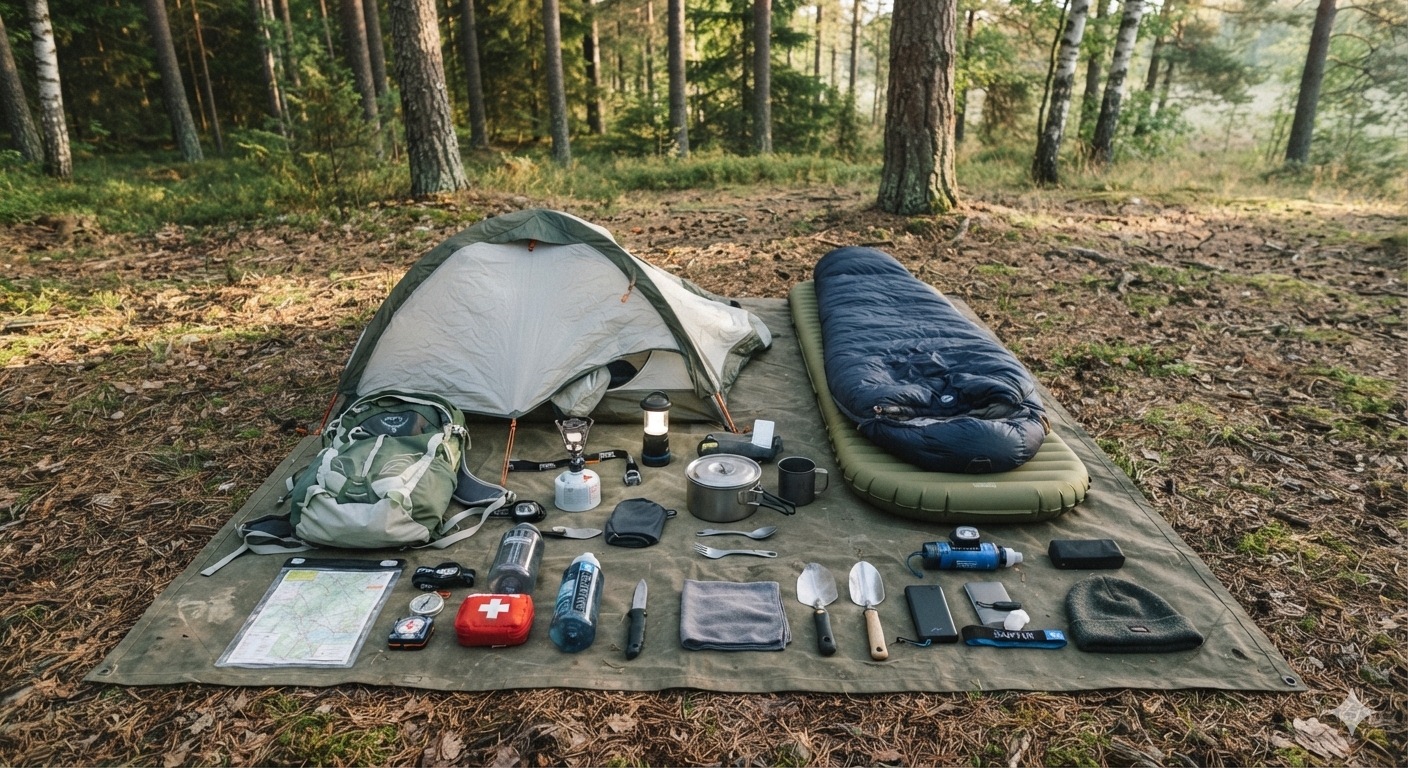
Four items account for most of your base weight: backpack, shelter, sleeping system, and sleeping pad. Optimizing these yields the biggest weight savings.
Your backpack typically weighs 2-4 pounds depending on capacity. A 50-liter pack for multi-day trips weighs more than a 30-liter day pack. Look for durable camping backpacks that balance weight with longevity.
Your shelter (tent or tarp) usually weighs 1-3 pounds. Single-wall tents weigh less than double-wall models but may have condensation issues. Three-season tents offer good balance.
Your sleeping bag typically weighs 1-2.5 pounds. Down-filled bags are lighter than synthetic, but synthetic performs better when wet. Temperature rating affects weight, a 20-degree bag weighs more than a 40-degree bag.
Your sleeping pad adds 0.5-1.5 pounds. Inflatable pads are lighter than foam but require careful handling. R-value (insulation rating) affects both weight and warmth.
Together, these four items represent 50-70% of your total base weight. Investing in quality, lightweight versions makes a substantial difference.
How to Use a Backpacking Base Weight Calculator
A backpacking base weight calculator helps you track and optimize gear weight systematically. List every item in categories (shelter, sleeping system, backpack, clothing, cooking gear, miscellaneous) and record weight in ounces.
Backpacking Basics | What is Base Weight?
Hyperlite Mountain Gear
Input your Big Four items first, then add everything else: trekking poles, water bottles, cooking pot, stove, headlamp, first aid kit, and repair kit. Small items add up quickly.
Once you have your total, identify the heaviest items and prioritize replacements. If your cooking system weighs more than your shelter, that's an obvious improvement area. Review your calculator every few months as you acquire new gear to make informed upgrade decisions.
Practical Steps to Reduce Backpacking Pack Weight
Reducing pack weight doesn't require expensive ultralight gear. The most effective reductions often come from strategy and repurposing what you already own.
Phase 1: Free or Near-Free Weight Reduction (No New Purchases)
Wear your heaviest items instead of packing them. This is the single most effective budget tactic. Wear your jacket, boots, and extra layers on the trail. This distributes weight across your entire frame rather than concentrating it on your shoulders and hips. A 3-pound jacket saves 3 pounds of pack weight at zero cost.
Eliminate redundancy ruthlessly. Most backpackers carry duplicates: two knives, three pairs of socks, multiple water bottles, or backup gear never used. Weigh everything and ask: "Have I used this on the last three trips?" If not, leave it home.
Repackage consumables. Transfer food and toiletries to smaller containers:
- Decant sunscreen, insect repellent, and hand sanitizer into 1-2 ounce bottles (saves 2-4 ounces).
- Repackage deodorant, lip balm, and medications into minimal quantities (saves 1-2 ounces).
- Use a ziplock bag instead of a full toiletry kit (saves 2-3 ounces).
Audit your clothing system. A realistic 3-season system includes: one pair of hiking pants, one pair of shorts, two pairs of socks, one base layer, one insulating layer, one rain jacket, and underwear. Removing one extra shirt saves 4-6 ounces.
Use multi-use items aggressively. A bandana serves as towel, pot holder, sun protection, and emergency cloth.
Phase 2: Budget-Friendly Gear Swaps ($20-$60 per item)
Replace your water bottle with a lightweight plastic one. A metal bottle weighs 8-12 ounces; plastic weighs 2-3 ounces. Cost: $5-$15. Savings: 5-9 ounces.
Phase 3: Strategic Consumable Choices
Choose dehydrated meals over fresh food. Dehydrated meals weigh 4-6 ounces; fresh equivalents weigh 8-12 ounces. Over a 5-day trip, this saves 1-1.5 pounds.
Phase 4: Testing Before Committing
Before buying anything, test new gear on a shakedown hike, a short 1-2 night practice trip. This reveals whether weight reduction improves your experience or creates problems. Borrow gear from friends if possible before purchasing.
Realistic Budget-Friendly Weight Reduction
Here's what's achievable on a $100-$200 budget:
- Free reductions (wear heavy items, eliminate redundancy, repackage): 1-2 pounds
- Lightweight plastic water bottle ($10): 0.5 pound
- Lightweight foam pad ($30): 0.5 pound
- Lightweight aluminum pot ($20): 0.5 pound
- Dehydrated meals (same cost as fresh): 0.5 pound
- Lightweight rain jacket ($50): 0.5 pound
Total: 3.5-4.5 pounds of weight reduction for $110-$150. Focus on your Big Four first, then target the heaviest remaining items. Budget-conscious weight reduction is slower but sustainable and often more durable than chasing the lightest gear.
Selecting Durable Camping Backpacks That Balance Weight and Longevity
Balancing weight and durability requires understanding trade-offs and measuring the weight-to-durability ratio, the missing metric that helps you make smarter purchasing decisions.
Understanding the Weight-to-Durability Trade-Off
Ultralight packs (under 2 pounds) use 100-denier or lighter nylon with minimal reinforcement. They excel on short trips and established trails but often fail within 50-100 trail miles on rough terrain or with heavy loads. Traditional packs (3-4 pounds) use 420-denier ballistic nylon with reinforced stress points and last 500+ trail miles.
Evaluating Material Durability Ratings
- Ripstop nylon (100-200D): Lightweight, adequate for day packs. Prone to punctures. Lifespan: 50-150 trail miles under heavy load.
- Ballistic nylon (420-1000D): Heavy-duty, resists abrasion and punctures. Adds 0.5-1 pound but extends lifespan to 300+ miles.
- Hybrid construction: Lighter fabric on pack body (200D ripstop) with ballistic reinforcement at high-stress zones. This balances weight and durability effectively.
Check manufacturer specifications for fabric composition. A pack listing "420D ballistic nylon on hip belt and bottom, 100D ripstop elsewhere" is explicitly designed for weight-to-durability balance.
Stress Points and Seam Quality
Durability failures happen at seams and attachment points, not in the middle of fabric:
- Hip belt attachment: Bears 60-70% of pack weight. Double-stitched or bar-tacked seams indicate reinforcement.
- Shoulder strap anchors: Experience constant flexing. Look for reinforcement patches underneath attachment points.
- Zipper installation: Quality packs use box-stitched zippers with reinforced pull tabs.
- Compression strap anchors: Use reinforced webbing or bar-tacking.
Calculating Your Personal Weight-to-Durability Threshold
Occasional users (1-4 trips per year, established trails): An ultralight pack (1.5-2 pounds) may suffice if you're willing to replace it every 2-3 years.
Material Inspection Before Purchase
If buying in person, physically inspect the pack: flex the hip belt and shoulder straps, look for reinforcement patches at stress points, check zipper smoothness, and feel the fabric. Online, read reviews specifically mentioning durability and failure modes. Look for reviews from users with 200+ trail miles.
The Real Cost of Weight Savings
- Ultralight pack: 1.5 pounds, $300, lasts 100 miles (2-3 years for casual users). Cost: $3 per mile.
- Mid-weight pack: 2.5 pounds, $280, lasts 400 miles (5+ years for casual users). Cost: $0.70 per mile.
For most backpackers, the 1-pound weight difference is negligible over a weekend trip, but the durability difference is substantial over a lifetime of use.
Consumables: Food, Water, and Fuel Weight Calculations
Consumables make up a significant portion of carried weight and decrease as your trip progresses.
Common Mistakes to Avoid When Optimizing Gear Weight
The biggest mistake is obsessing over ounces while ignoring pounds. Saving two ounces on a tent stake doesn't matter if your backpack weighs five pounds more than necessary. Focus on the Big Four first.
Conclusion
Understanding camping gear weight specs helps you make smarter decisions about every piece of equipment you carry. The distinction between base weight and worn weight, knowledge of the Big Four, and practical weight-reduction strategies transform how you approach backpacking.
Frequently Asked Questions
What is the difference between base weight and total pack weight?
Base weight is the total weight of all your gear without consumables like food, water, or fuel. Total pack weight includes everything you carry on the trail, including consumables. For example, your tent, sleeping bag, and backpack might total 12 pounds (base weight), but once you add 3 days of food and water, your total pack weight becomes 18 pounds. Understanding this distinction helps you set realistic weight targets and track which items have the biggest impact on your load.
How do I calculate my backpacking gear weight accurately?
Weigh each item individually on a kitchen or postal scale, then record the weights in a spreadsheet or use a backpacking base weight calculator. Group items by category: shelter system, sleeping system, backpack, clothing, and miscellaneous gear. Add each category total, then add your consumables (food, water, fuel) separately. Most hikers find that the big four items, backpack, tent, sleeping bag, and sleeping pad, account for 40-60% of their total pack weight, so prioritizing reductions there yields the best results.
Is 30 pounds too heavy for a multi-day backpacking trip?
A 30-pound total pack weight is reasonable for most multi-day trips if your base weight is 15 pounds or less. The general rule is to keep your pack weight at or below 20% of your body weight for comfortable hiking. A 150-pound hiker should aim for a maximum of 30 pounds total. However, factors like terrain, fitness level, and trip duration matter, steep mountains demand lighter loads, while flat trails can accommodate slightly more. If you're consistently hitting 30+ pounds, focus on reducing your big four items first.
What items should I prioritize when trying to reduce pack weight?
Start with the big four: backpack, tent, sleeping bag, and sleeping pad. These four items typically account for the largest portion of your base weight. Upgrading a 4-pound tent to a 2-pound ultralight shelter saves 2 pounds immediately. Next, examine your consumables, water weight adds up fast, so plan your water carries strategically using trail maps to identify reliable water sources. Finally, audit your clothing and miscellaneous gear for items you don't actually use, which often reveal quick wins without sacrificing durability or comfort.
When you're ready to upgrade your gear with equipment that balances weight, durability, and comfort, The Camping Gear Guy offers a curated selection of camping gear designed for backpackers who refuse to compromise. Our inventory includes lightweight sleeping systems, durable backpacks with excellent suspension, and high-quality shelter options that won't leave you stranded on the trail. Shop now and build the pack that's right for your next adventure.