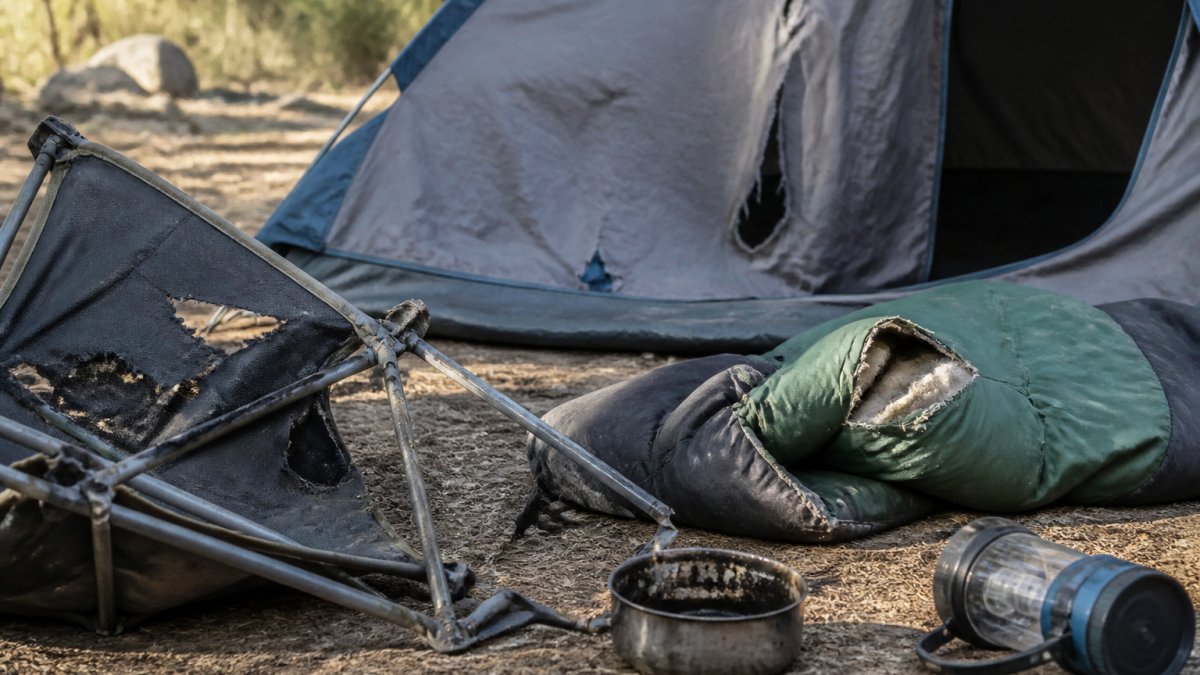
Why Cheap Camping Gear Fails Quickly: A Durability Guide
DDD. Dvorak· Content WriterOct 21, 202611 min read2,194 wordsLast Updated: Oct 20, 2026
Why Cheap Camping Gear Fails Quickly
At The Camping Gear Guy, we've seen firsthand how cheap camping gear fails under real-world conditions.
Budget manufacturers cut costs with thinner fabrics, weaker stitching, and lower-grade hardware. Those shortcuts show up fast when your tent faces wind, rain, or the weight of a full backpack.
The real problem isn't that cheap gear is "bad", it's designed for light use.
Material Quality and Construction Differences
Budget gear uses lighter fabrics to save money, a cheap tent might use 20-denier nylon instead of 40-denier or higher.
Stitching matters as much as fabric.
Quality gear reinforces attachment points where straps meet the main body. Budget gear often glues or stitches pieces directly to thin fabric, so the attachment point fails first under load.
Common Failure Points in Budget Gear
The weakest spots in budget camping gear tend to be predictable:
- Seams and stitching come undone under load or after repeated flexing
- Zippers jam, break, or separate from the fabric they're attached to
- Straps tear away from the main body or break at stress points
- Fabric develops holes from UV damage, abrasion, or minor tears that spread
- Poles bend or crack under wind or uneven load distribution
- Insulation compresses or shifts, creating cold spots in sleeping bags
- Hardware (clips, buckles, D-rings) breaks or bends under pressure
Each failure traces back to how budget gear is made, understanding the causes helps you spot weak gear before you buy.
How to Choose a Durable Tent That Withstands Stress
A durable tent starts with the right fabric and poles.
Aluminum poles are lighter and stronger than the fiberglass many budget tents use. Fiberglass bends more easily, can snap under wind or snow load, and doesn't recover its shape well.
Quality tents use reinforced pole sleeves or clips that distribute load evenly; budget tents often have loose sleeves or weak attachment points that fail when the pole flexes.
Fabric Weight and Seam Construction
Fabric weight is measured in denier, higher denier means thicker, more durable fabric. A 75-denier fabric is roughly three times thicker than 20-denier.
Aim for at least 40-denier shells and 70-denier floors. Budget tents often use 20-denier or lower, which tears easily and degrades quickly in sunlight.
Seams are where tents most often fail. Quality seams are:
- Stitched with tight, even tension
- Sealed with seam tape or sealant on the inside
- Reinforced at stress points like corners and pole attachment areas
- Sewn with thread that matches the fabric weight
Budget tents skip sealing, use loose stitching, or both. This leads to water leaking through seams and stitching unraveling under load.
Pole Materials and Weather Protection
Aluminum poles are the standard for quality tents: lighter than fiberglass but much stronger, and they don't degrade in sunlight the way fiberglass does.
Fiberglass poles, common in budget tents, have real drawbacks:
- They bend more easily and don't always spring back
- They can snap under heavy snow or wind
- They degrade faster under UV exposure
- They're heavier for the same strength as aluminum
A quality tent has a full rainfly that extends low enough to protect the body.
Camping Gear Quality Checklist: What to Inspect Before You Buy
Inspect any camping gear for signs of weak construction before buying. This checklist helps you spot cheap gear that will fail quickly.
Your Cheap Backpacking Gear Is Costing You Too Much
Northwest Walking
Field Inspection Checklist
Check these items before you buy:
- Fabric weight: Run your hand over the fabric. Quality fabric feels substantial, not thin or papery
- Seams: Look for even stitching and seam tape on the inside. Loose or uneven stitching is a red flag
- Attachment points: Tug gently on straps and pole attachment areas. They should not flex or move
- Zippers: Slide the zipper slowly along its full length. It should move smoothly without catching
- Poles: Flex the poles gently. They should bend slightly and spring back, not feel weak or wobbly
- Corners and stress areas: Look for reinforcement patches or extra stitching at corners and where straps attach
- Hardware: Check that clips, buckles, and D-rings are solid and don't feel flimsy
- Overall construction: The gear should feel well-made and solid, not lightweight or flimsy
If gear feels cheap or flimsy when you handle it, it probably is.
Specific Components That Fail Under Stress and Strain
Certain components fail more often because they handle the most stress. Knowing where failures happen helps you choose gear that lasts.
Backpack Straps and Seams
Backpack straps carry the full weight of a loaded pack, and budget packs use thin straps with weak stitching. Load the pack and the straps pull away or the stitching unravels.
Quality backpacks use thick straps (at least 2 inches wide) with reinforced attachment points, tight stitching doubled or tripled at stress points, and a reinforced backing plate inside the pack to distribute load.
Budget packs have single-stitched seams that come apart when full; quality packs use double or triple stitching plus reinforcement tape along stress seams.
Sleeping Bag Insulation and Cold Spots
Sleeping bag insulation fails in two ways: it compresses, losing its ability to trap air, or it shifts inside the bag, creating cold spots.
Quality bags use baffles or boxes to hold insulation in place, and the insulation is denser and resists compression better.
Sleeping bag zippers also fail under stress: budget bags use cheap zippers that jam or separate, while quality bags use heavy-duty zippers with reinforced sliders.
Water Filter and Hydration System Failures
Water filters fail when the element clogs or cracks.
Hydration hoses crack or leak from UV, temperature swings, and bending stress. Budget hoses are thin and brittle; quality hoses are thicker and more flexible.
The bite valve on hydration systems is another weak point. Budget valves leak or don't seal properly. Quality valves seal tightly and resist degradation from repeated use.
How to Repair a Tent Zipper and Other Field Fixes
Knowing how to repair gear in the field extends its life and keeps your trip on track. Most common failures can be fixed with simple tools and techniques.
Quick Zipper Repair Techniques
Tent zippers jam when dirt gets into the slider or when the fabric gets pinched. To fix a jammed zipper:
- Stop pulling immediately, forcing it will damage the slider
- Apply graphite (pencil lead) or silicone lubricant to the zipper teeth
- Gently wiggle the slider back and forth to work in the lubricant
- Slowly slide the zipper back to where it was stuck
- Continue opening or closing once it moves freely
If the zipper separates (comes off the track), you can sometimes fix it by:
- Aligning the separated part back onto the track
- Gently sliding the slider back onto the track
- Testing the zipper carefully before relying on it
If the slider itself breaks, you can temporarily replace it with a safety pin or cord looped through the slider hole.
Fabric Tears and Hole Patching
Small holes and tears can be patched in the field using a repair kit. Most kits include patches and adhesive or stitching materials.
For small holes (under 1 inch):
- Clean the area around the hole
- Apply the patch according to kit instructions
- Press firmly and let the adhesive cure
For larger tears, you may need to stitch the tear closed before patching.
For holes in the tent floor, patch from the inside if possible. This keeps the patch from catching on the ground and peeling off.
Tent Pole Repair: Prevention and Quick Fixes
Tent poles break when they're overloaded, bent too far, or struck by wind. Prevention is easier than repair, but field fixes can get you through the night.
Identifying Pole Damage Before It Fails
Inspect poles before every trip. Look for:
- Cracks or splits in the pole sections
- Bends that don't straighten out when the pole is relaxed
- Loose connections between pole sections
- Corrosion on aluminum poles (white or gray powder)
If you spot damage, replace the pole section before your trip. A damaged pole will fail under stress.
Emergency Pole Reinforcement
If a pole breaks in the field, you can reinforce it temporarily:
- Splint the break by wrapping a stick or spare pole section alongside the damaged section
- Wrap tightly with duct tape or cord to hold the splint in place
- Test carefully before relying on the repair
This won't make the pole as strong as new, but it can hold long enough to get through the night or reach camp.
Budget Gear That Works: When Cheap Is Adequate
Not all budget camping gear fails. Some cheap gear is perfectly adequate for specific uses. The key is matching gear to your needs.
Budget gear works well for:
- Car camping where weight and durability under load don't matter as much
- Occasional trips where the gear won't see heavy use
- Beginner campers learning what they like before investing in quality gear
- Low-stress conditions like calm weather and light use
- Backup or emergency gear that sits unused most of the time
Budget gear doesn't work well for:
- Backpacking trips where weight matters and gear takes heavy abuse
- Frequent use where durability directly affects value
- Bad weather where gear is stressed and needs to perform
- Extended trips where reliability is critical
- High-altitude or extreme environments where gear failure is dangerous
The real question isn't whether cheap gear is "bad." It's whether cheap gear is right for how you'll actually use it. A budget tent for car camping might last years. The same tent on a week-long backpacking trip might fail in days.
Durability Expectations and Realistic Timelines
Understanding how long gear should last helps you make smart buying decisions.
Quality tent shells typically last 5-10 years with normal use.
Sleeping bags last longer if you care for them.
Backpacks last 5-10 years with quality construction.
Water filters last 1-2 years depending on water quality and use.
These timelines assume normal care.
The real cost of cheap gear isn't just the lower price.
Choosing the right camping gear doesn't mean spending the most money.
Frequently Asked Questions
Why does cheap camping gear fail so quickly?
Budget camping gear fails because manufacturers use thinner fabrics, lower-grade stitching, and less durable materials to reduce costs. Seams are often machine-stitched with fewer passes, zippers use cheaper metal alloys that corrode or jam, and tent poles may be thinner aluminum that bends easily. These components experience significant stress during setup, pack load distribution, and exposure to wind, moisture, and temperature changes. One trip in harsh weather can reveal weaknesses that quality gear handles for years.
Is budget camping gear reliable for occasional trips?
Budget gear can work for occasional, low-stress trips in mild conditions. If you're car camping once or twice a year in fair weather, cheaper options may survive several seasons. However, reliability drops sharply in bad weather, on longer trips, or with heavy pack loads. The real risk is catastrophic failure at the worst moment, a tent pole breaking in a rainstorm or a backpack strap snapping on a remote trail. For occasional use, inspect gear carefully before each trip and avoid overloading.
What camping gear is worth spending more on?
Prioritize durability investments in gear that bears weight or endures repeated stress: backpacks, tent poles, sleeping bags, and water filters. Tents deserve quality spending because pole failure or fabric tears in bad weather create safety risks. Sleeping bags with quality down insulation or synthetic fill perform better in cold and resist clumping. Backpack straps and seams handle pack load for years if built well. Conversely, lightweight items like stakes, guy lines, or cookware tolerate budget options better. The Camping Gear Guy offers durable options across all categories so you can balance quality with your budget.
How can you tell if a tent is well made before buying?
Inspect fabric weight, quality tents use 40D (denier) or higher ripstop nylon; cheaper versions use 20-30D that tears easily. Check seams for tight, evenly spaced stitching; budget tents show loose, irregular patterns. Examine tent poles for consistent diameter and smooth finish; thin or dented poles fail under load. Look at zippers, quality models use metal sliders; cheap plastic zippers jam or break quickly. Test the canopy stretch; quality fabric resists sagging. Read reviews mentioning field failures or durability issues. These details predict how gear performs under stress and bad weather.